
Newborn nails are paper-thin, grow surprisingly fast and are sharp enough to leave little scratches on your baby’s face. Trimming them is one of the most nerve-racking jobs for new parents, so here’s how to make it quick, safe and calm.
Why baby nails need regular care
Babies can’t control their hand movements yet, so they often scratch their own cheeks and eyes. Fingernails grow quickly and usually need attention once or twice a week. Toenails grow more slowly and may only need doing every couple of weeks.
Scratch mittens help for a short while, but babies use their hands to explore and self-soothe, so keeping nails short and smooth is the better long-term answer.
The best time to trim baby nails
- After a bath, when nails are softer and easier to file or cut.
- While your baby is asleep or drowsy, or during a calm feed when hands are still.
- In good light, so you can clearly see where the nail ends and the skin begins.
Clippers, scissors, files or an electric trimmer?
| Tool | Good for | Watch out for |
|---|---|---|
| Baby nail clippers | Quick trims on older babies | Easy to nip the fingertip on a wriggly baby |
| Round-tip baby scissors | Careful, controlled cutting | Still a blade, so you need steady hands and stillness |
| Emery board | Smoothing rough edges | Slow, and hard to use on tiny nails |
| Electric baby nail trimmer | Newborns and nervous parents | Needs batteries; follow the head sizes for your baby’s age |
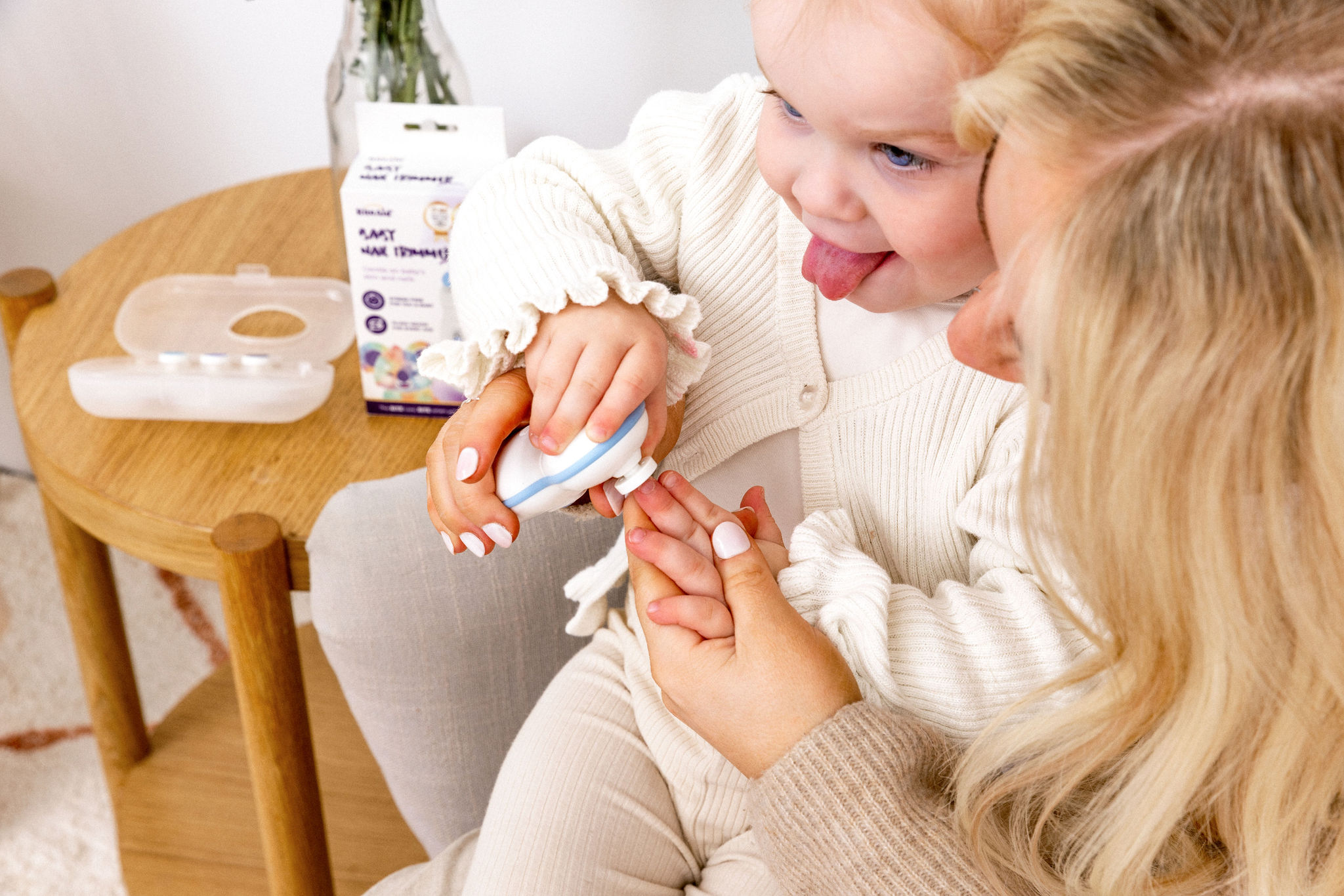
Many parents start with an electric baby nail trimmer in the early months. It files the nail down gently instead of cutting it, so there’s no blade near delicate skin, and the quiet hum is often relaxing rather than startling.
How to use an electric baby nail trimmer, step by step
- Choose the right filing head for your baby’s age. Newborn heads are the softest.
- Hold your baby’s hand firmly but gently, and press the fingertip pad slightly away from the nail.
- Touch the spinning pad to the nail edge and follow the natural curve of the nail. Let the pad do the work, with no pressure needed.
- Check as you go, aiming for a short, smooth edge that’s level with the fingertip.
- Do toenails straight across to help prevent ingrown nails.
- Clean the filing head afterwards, as your instructions describe.
If your baby wakes or gets upset, stop and finish the other hand later. There’s no need to do all ten fingers in one go.
What if I nick the skin?
It happens to almost every parent, so don’t panic. Press a clean, damp cloth gently on the spot until the bleeding stops. Avoid plasters on little fingers, as babies put their hands in their mouths and a loose plaster can be a choking risk. If the area later looks red, swollen or pus-filled, ask your clinic or doctor to take a look.
Things to avoid
- Biting or peeling your baby’s nails. It can tear the nail and bring germs from your mouth into tiny cuts.
- Cutting too short or into the corners.
- Using adult clippers, which are far too big for baby nails.
Further reading
This guide is general information for parents and isn’t a substitute for medical advice. If you’re worried about your baby or yourself, contact your doctor, clinic or nearest emergency unit.