
A blocked nose seems minor, until it stops your baby feeding or sleeping. Babies can’t blow their noses, so they rely on you to help. Here’s how to clear a stuffy nose gently, and how to tell normal congestion from something that needs a doctor.
Why babies get blocked noses so easily
Newborns have very narrow nasal passages and breathe mainly through their noses, especially while feeding. Even a small amount of mucus from a cold, dry air or dust can make them sound snuffly, struggle to latch or wake more often at night.
Many newborns sound a little congested in the first weeks even when they’re perfectly well. What matters is whether it’s affecting their breathing, feeding or sleep.
How to use a nasal aspirator, step by step
- Wash your hands and make sure the aspirator is clean.
- Loosen the mucus first with a few saline (salt-water) drops or spray in each nostril, as your pharmacist recommends. Wait about a minute.
- Lay or hold your baby with their head slightly tilted back and supported.
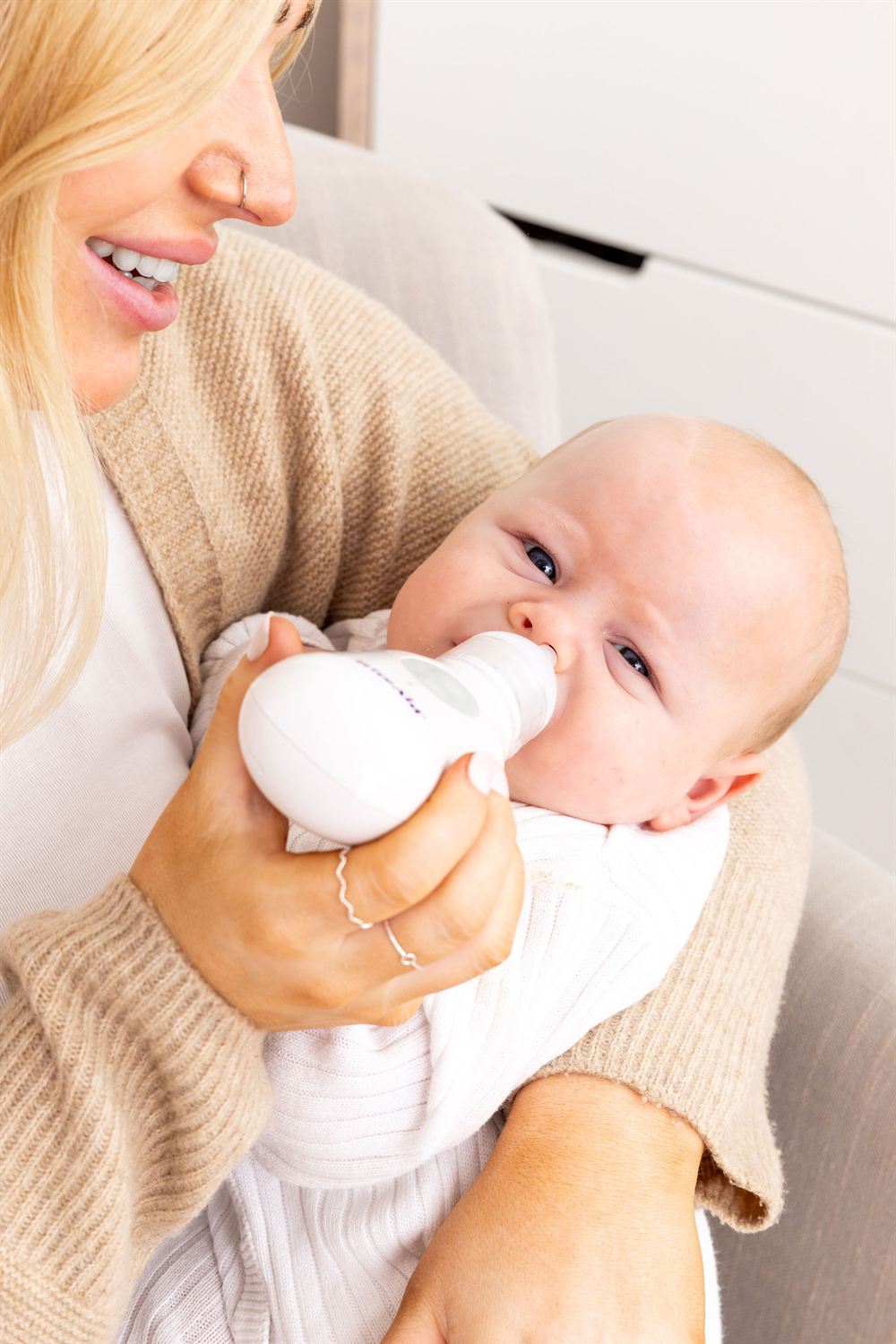
- Place the soft tip at the opening of the nostril. Never push it deep inside the nose.
- Use gentle suction, following the instructions for your aspirator, then repeat on the other side.
- Clean the aspirator straight after use, and let it dry, so germs don’t spread.
How often should you suction a baby’s nose?
Less is more. Clearing the nose before feeds and before sleep is usually when it helps most. Suctioning too often, or too hard, can irritate the inside of the nose and make swelling worse. If you find you need to do it constantly, check in with your clinic.
Other ways to ease a stuffy nose
- Keep feeds going. Shorter, more frequent feeds can be easier for a congested baby.
- Add some moisture to the air, for example by sitting with your baby in a steamy bathroom for a few minutes. Never leave them alone near hot water.
- Hold your baby upright for cuddles and burping when they’re awake. For sleep, always put your baby on their back on a flat, firm surface.
- Keep the air smoke-free, including from fires and cigarettes.
- Only use medicated nose drops if your doctor or pharmacist says they’re suitable for your baby’s age.
Choosing a nasal aspirator
Look for a soft, flexible tip, parts that are easy to take apart and clean, and a size that’s easy to use with one hand while you hold your baby with the other. A compact aspirator that travels well is a lifesaver during cold and flu season.
Further reading
- Alberta Health Services: How to clean out your baby’s nose
- Nationwide Children’s Hospital: Suctioning the nose
This guide is general information for parents and isn’t a substitute for medical advice. If you’re worried about your baby or yourself, contact your doctor, clinic or nearest emergency unit.