
Your baby feels warm, they’re a little grizzly, and it’s 2am. Knowing what a normal temperature is, how to measure it properly and which signs need a doctor makes those moments far less frightening. Here’s a calm, practical guide for parents.
What is a normal temperature for a baby?
A baby’s normal temperature is usually around 36.5°C to 37.5°C. It shifts a little through the day and can rise slightly after a feed, a warm bath or a long cuddle under blankets.
In babies and children, a fever is a temperature of 38°C or higher. A fever is the body’s normal way of fighting an infection. On its own it isn’t an illness, but in young babies it always deserves attention.
How to take your baby’s temperature
There are a few ways to measure a baby’s temperature. Each has its place:
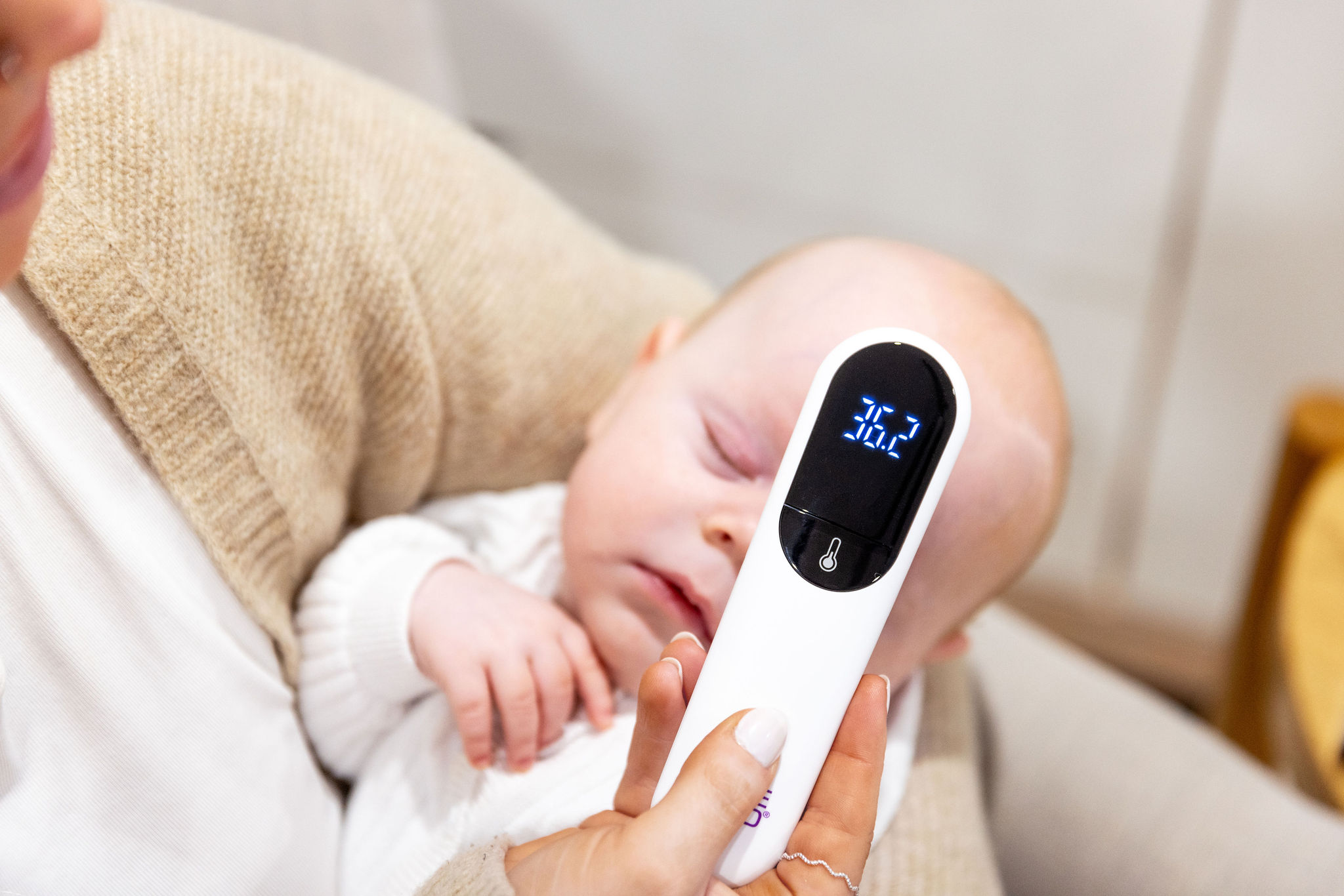
- Forehead (non-contact) thermometer: quick and comfortable, and you don’t need to wake a sleeping baby. Ideal for regular checks at home.
- Underarm (digital) thermometer: often recommended for young babies. Hold your baby’s arm gently against their side until the thermometer beeps.
- Ear thermometer: fast, but harder to position correctly in tiny ear canals, so better suited to older babies and toddlers.
- Rectal reading: very accurate, and the method doctors may use to confirm a fever in a young baby. Ask your clinic to show you how before trying it at home.
Whatever method you use, if a reading is high, confirm it the way your doctor or clinic recommends, and never ignore a baby who seems unwell just because the number looks normal.
Getting an accurate reading with a non-contact thermometer
A non-contact infrared thermometer measures the heat coming off your baby’s forehead. A few habits make the reading far more reliable:
- Let your baby settle indoors first. Coming in from the sun, the cold or a warm bath changes skin temperature, so wait about 15 minutes.
- Keep the forehead clear and dry. Brush hair aside and wipe away any sweat.
- Hold it at the distance in your instructions, pointing at the centre of the forehead.
- Take two or three readings a minute apart and use the most consistent one.
- Write it down with the time, along with any medicine given. Your doctor will find this helpful.
Caring for a baby with a mild fever at home
If your doctor is happy for you to care for your baby at home:
- Keep feeds going. Offer the breast or bottle more often to prevent dehydration.
- Dress them lightly in one cool layer. Don’t bundle a feverish baby in extra blankets.
- Keep the room comfortably cool, not cold.
- Only give fever medicine on advice. Ask your pharmacist or doctor which medicine and dose is right for your baby’s age and weight.
- Keep checking on them, including through the night.
Why a non-contact thermometer is worth having
Fevers rarely arrive at a convenient time. A non-contact thermometer lets you check on a sleeping baby without waking them, and gives you a number in seconds so you can decide on your next step calmly. Many also measure bath water, bottles and room temperature, which is handy in the newborn months.
Further reading
- NHS: High temperature (fever) in children
- Royal Hospital for Children Glasgow: Fever in babies under 3 months
- Pregnancy, Birth and Baby: Fever in babies
This guide is general information for parents and isn’t a substitute for medical advice. If you’re worried about your baby or yourself, contact your doctor, clinic or nearest emergency unit.